Tarn, France
My weather app is the ledger of my days. Severe weather. Red warning. Air quality deteriorated. 18 degrees above average. 21 degrees above average. 23 degrees above average. 19…25…22…23. The sun icon is interrupted only rarely by a white cloud, vacant and empty, and below in profane type it reads: forecast for rain 0%. For weeks now I’ve been consuming global headlines that affirm what I already know to be true. “Europe swelters.” “Heat dome locks in over Western Europe.” “Extreme heat is melting national records.” “Third heatwave strikes France.” For the first time, I know these climate headlines mean me.
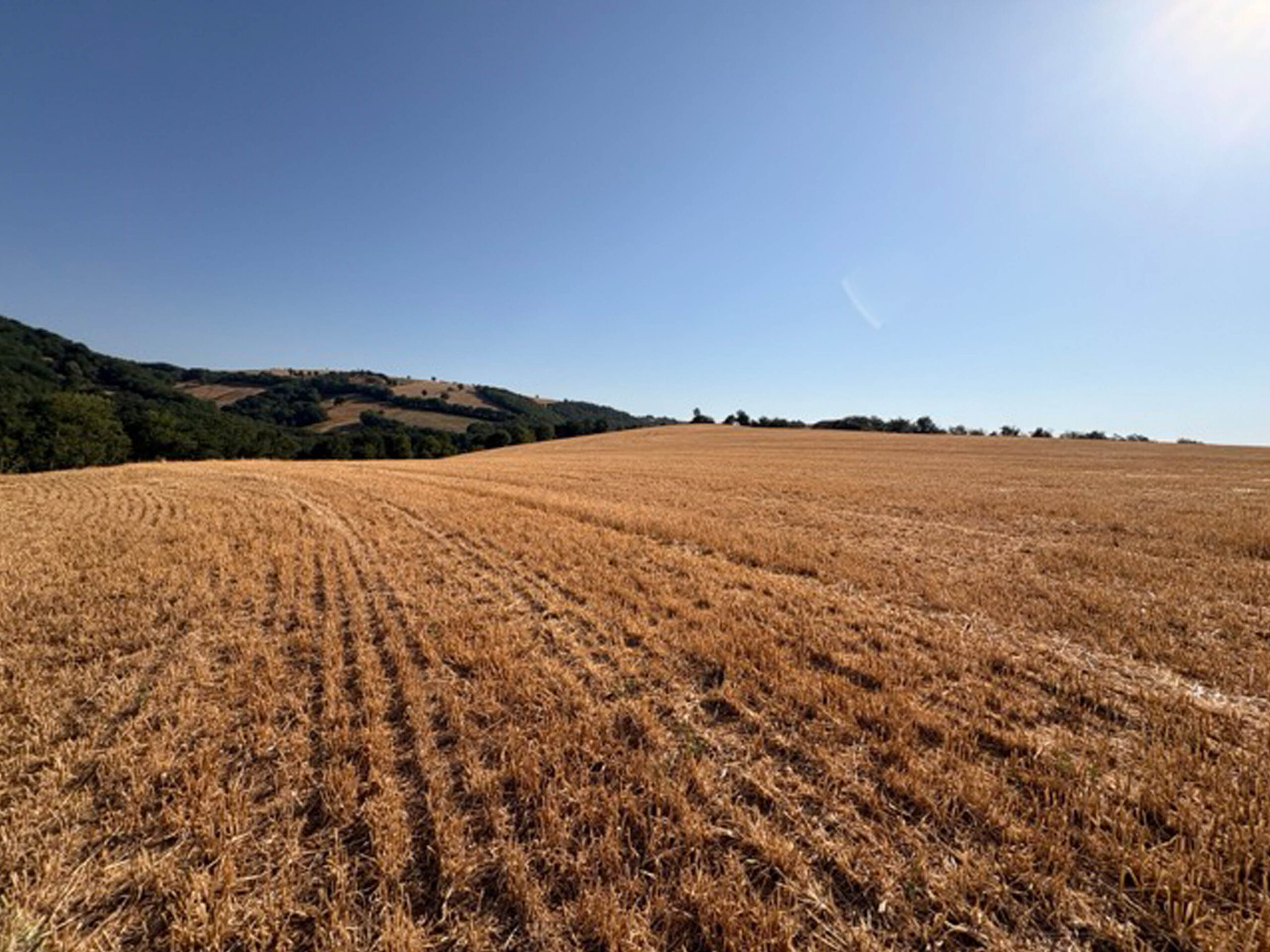
Two years ago, my French-American husband and I bought a small property in a narrow valley in Southwest France. The French call this region la France profonde — deep France. A tree-lined creek runs past our door, sourced barely a mile upstream, and by the time it reaches the sea it has joined the Tarn, then the Garonne, and traveled half the country to empty into the vast Atlantic. The soaring hills around us are farmland — wheat, barley, corn, alfalfa for the cows and sheep — worked by people who speak a dialect of old Occitan mixed with traces of Italian, a language as layered as the ground it describes.
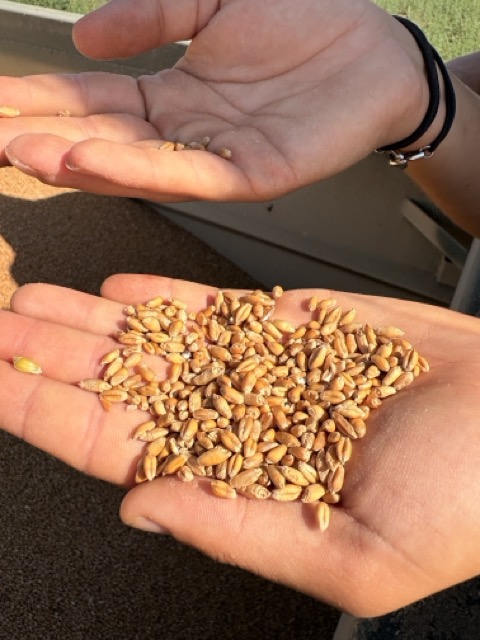
This is a warm region. For centuries, farmers and villagers here have been coaxing the land, building canals and reservoirs to capture and hold water to ensure survival of their crops, their animals, and themselves. Time is marked by the work of the seasons — planting, cutting, baling, replanting. It’s now high summer, and most years the rains taper off gradually toward August. This year, the rain stopped abruptly in early May, and the first “heatwave” rolled through. Everything grew fast and dried out even faster. The farmers had no choice but to harvest what they could and race to salvage the grain before it dried on the stalk. As it is, the grain size is small and the yield severely reduced.
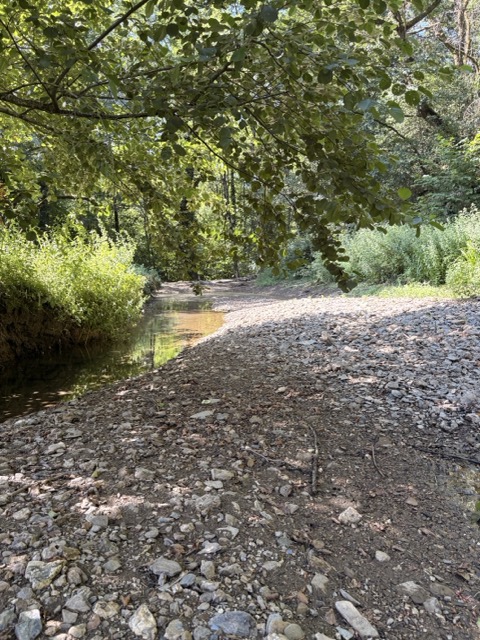
For weeks farmers have been constrained by the regional authorities to nighttime work for fear of fire sparked by hot equipment. So our neighbors have shifted their sleep schedules as best they can to work long hours in the dark. In the searing morning sun, the fields are quiet. The animals, too, are hurried out of the sun into hot, crowded barns, and the water in the creek has stopped flowing – only staggered muddy pools remain.
Our nearest farmer neighbor, Jean-Pierre, came by one afternoon last week to tell us his 87-year-old mother had passed away in the night — we gave our sympathies in broken French, but didn’t ask any more questions. The day before, we’d seen his brother Lucien on the dirt road, teaching his young granddaughter to ride a bike. In the two years we’ve known this family, we’ve never once seen these men in broad daylight without their tractors or animals.
We made small talk with Lucien as best we could, but the local drawl was so heavy that even my husband, who is otherwise fluent, struggled to follow his reply. Yet there were small phrases that even I could parse: jamais dans ma vie — never in my life — and les animaux souffrent — the animals are suffering. All the farmers are saying the same, he says: this year feels different, it’s not just a ‘dry year.’ Everybody is going through the motions, but there’s anxiety in their few chosen words and resigned shrugs.
All of this was in my head when I awoke a few days ago, still sheltered within our three-foot-thick stone walls, listening to the early birds clamor through their daily tasks. Hot gusts would soon sink downward as if on a vertical conveyor belt into the earth, muting everything beneath them. Nine hours ahead of home, I reached for my phone and scrolled news from the day before. Far down the page, my eyes caught on a phrase in a story title: “…an edginess grows.” I glanced quickly at the accompanying photo — brown dust swirling in the foreground, desiccated brush receding toward the big sky horizon. Without reading a word, I knew the subject was drought in the American West. I say out loud, “Oh my god, 6,000 miles away, and that might as well be here.”
The phrase was from Maddy Butcher’s piece, “Here in the drought-parched rural West, an ‘edginess’ grows,” and it read like a field report. Montezuma County, Colorado had no more snow pack and extreme drought conditions were redefining an already spare existence. She described ranchers squabbling over dwindling water, reservoirs cracking like broken skin, and dust seething everywhere, slowly asphyxiating every bastion of life inside and out. I don’t have a long claim to the land here in France like Ms. Butcher does in Colorado, but I married a Frenchman and something called us to this place — that I’m sure of. I feel viscerally connected to our new friends and neighbors – Lucien, Jean-Pierre, Pascal, Michel, Céline, Quentin, André, others – through bewilderment and sorrow for a place so otherwise simple.
Here’s what I’ve learned this summer: climate change is, ultimately, and perhaps only, personal. I now know this tiny valley to be drier than the people who’ve farmed it for generations can remember. One way or another, climate reckoning is here for everyone. And in that, I felt a kind of solidarity, in exhaustion, in despair, and, yes, in anger. It doesn’t fix a drought. It doesn’t refill a reservoir or bring back a dry stream. But it might be the only way many of us find a reason to use our voices at all, by first recognizing them in someone else’s story, then having the will to speak ourselves. Finally saying so others can hear: this isn’t right, this isn’t ok. I’m grateful to Maddy Butcher for that.
POST SCRIPT: Days after reading Maddy Butcher’s dispatch, I’m haunted most by her confession of watering the fruit trees. Seeking evidence of our own vitality in the form of fruit or flower seems like such a primal compulsion. I walk outside, into the day’s heat, and see a stubborn climbing rose that has come to feel like a living part of the stone house itself. Neglecting it would feel like giving in to something — even though, in reality, the day we leave this place to fly home, its survival will be fated by forces none of us control, but all of us have played a role in summoning. It seems fitting, somehow — a larger truth about our common condition, whether we like it or not.
Alex Kinnebrew