
• Tarn, France 

    My weather app is the ledger of my days. Severe weather. Red warning. Air quality deteriorated. 18 degrees above average. 21 degrees above average. 23 degrees above average. 19…25…22…23. The sun icon is interrupted only rarely by a white cloud, vacant and empty, and below in profane type it reads: forecast for rain 0%. For weeks now I’ve been consuming global headlines that affirm what I already know to be true. “Europe swelters.” “Heat dome locks in over Western Europe.” “Extreme heat is melting national records.” “Third heatwave strikes France.” For the first time, I know these climate headlines mean me. 

    Two years ago, my French-American husband and I bought a small property in a narrow valley in Southwest France. The French call this region la France profonde — deep France. A tree-lined creek runs past our door, sourced barely a mile upstream, and by the time it reaches the sea it has joined the Tarn, then the Garonne, and traveled half the country to empty into the vast Atlantic. The soaring hills around us are farmland — wheat, barley, corn, alfalfa for the cows and sheep — worked by people who speak a dialect of old Occitan mixed with traces of Italian, a language as layered as the ground it describes.
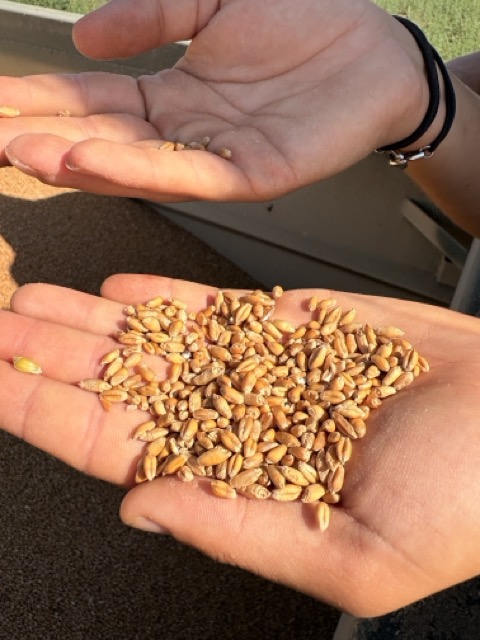
    The grain size is smaller this year due to lack of rain and an early heatwave.

    This is a warm region. For centuries, farmers and villagers here have been coaxing the land, building canals and reservoirs to capture and hold water to ensure survival of their crops, their animals, and themselves. Time is marked by the work of the seasons — planting, cutting, baling, replanting. It’s now high summer, and most years the rains taper off gradually toward August. This year, the rain stopped abruptly in early May, and the first “heatwave” rolled through. Everything grew fast and dried out even faster. The farmers had no choice but to harvest what they could and race to salvage the grain before it dried on the stalk. As it is, the grain size is small and the yield severely reduced.

    For weeks farmers have been constrained by the regional authorities to nighttime work for fear of fire sparked by hot equipment. So our neighbors have shifted their sleep schedules as best they can to work long hours in the dark. In the searing morning sun, the fields are quiet. The animals, too, are hurried out of the sun into hot, crowded barns, and the water in the creek has stopped flowing – only staggered muddy pools remain. 

    Our nearest farmer neighbor, Jean-Pierre, came by one afternoon last week to tell us his 87-year-old mother had passed away in the night — we gave our sympathies in broken French, but didn’t ask any more questions. The day before, we’d seen his brother Lucien on the dirt road, teaching his young granddaughter to ride a bike. In the two years we’ve known this family, we’ve never once seen these men in broad daylight without their tractors or animals. 

    We made small talk with Lucien as best we could, but the local drawl was so heavy that even my husband, who is otherwise fluent, struggled to follow his reply. Yet there were small phrases that even I could parse: jamais dans ma vie — never in my life — and les animaux souffrent — the animals are suffering. All the farmers are saying the same, he says: this year feels different, it’s not just a ‘dry year.’ Everybody is going through the motions, but there’s anxiety in their few chosen words and resigned shrugs. 

    All of this was in my head when I awoke a few days ago, still sheltered within our three-foot-thick stone walls, listening to the early birds clamor through their daily tasks. Hot gusts would soon sink downward as if on a vertical conveyor belt into the earth, muting everything beneath them. Nine hours ahead of home, I reached for my phone and scrolled news from the day before. Far down the page, my eyes caught on a phrase in a story title: “…an edginess grows.” I glanced quickly at the accompanying photo — brown dust swirling in the foreground, desiccated brush receding toward the big sky horizon. Without reading a word, I knew the subject was drought in the American West. I say out loud, “Oh my god, 6,000 miles away, and that might as well be here.” 

    In most years, the rains taper off in August but this year, it stopped in May when the first heatwave hit.

    The phrase was from Maddy Butcher’s piece, “Here in the drought-parched rural West, an ‘edginess’ grows,” and it read like a field report. Montezuma County, Colorado had no more snow pack and extreme drought conditions were redefining an already spare existence. She described ranchers squabbling over dwindling water, reservoirs cracking like broken skin, and dust seething everywhere, slowly asphyxiating every bastion of life inside and out. I don’t have a long claim to the land here in France like Ms. Butcher does in Colorado, but I married a Frenchman and something called us to this place — that I’m sure of. I feel viscerally connected to our new friends and neighbors – Lucien, Jean-Pierre, Pascal, Michel, Céline, Quentin, André, others – through bewilderment and sorrow for a place so otherwise simple. 

    Here’s what I’ve learned this summer: climate change is, ultimately, and perhaps only, personal. I now know this tiny valley to be drier than the people who’ve farmed it for generations can remember. One way or another, climate reckoning is here for everyone. And in that, I felt a kind of solidarity, in exhaustion, in despair, and, yes, in anger. It doesn’t fix a drought. It doesn’t refill a reservoir or bring back a dry stream. But it might be the only way many of us find a reason to use our voices at all, by first recognizing them in someone else’s story, then having the will to speak ourselves. Finally saying so others can hear: this isn’t right, this isn’t ok. I’m grateful to Maddy Butcher for that. 

    POST SCRIPT: Days after reading Maddy Butcher’s dispatch, I’m haunted most by her confession of watering the fruit trees. Seeking evidence of our own vitality in the form of fruit or flower seems like such a primal compulsion. I walk outside, into the day’s heat, and see a stubborn climbing rose that has come to feel like a living part of the stone house itself. Neglecting it would feel like giving in to something — even though, in reality, the day we leave this place to fly home, its survival will be fated by forces none of us control, but all of us have played a role in summoning. It seems fitting, somehow — a larger truth about our common condition, whether we like it or not. 

    Alex Kinnebrew 
  • I grew up in a community where everyone had a garden. My parents and our neighbors grew their own food, bought meat raised on each other’s farms, and canned almost everything. It wasn’t gourmet. It was agrarian common sense.

    My brother, a business professor, still grows his own vegetables and shares them with our family. The quality is better than anything wrapped in plastic. It’s his way of nurturing us. And many of the people I grew up with are living healthy, active lives into their 90s.

    Nobody called it sustainable. It just was.

    Two recent studies are making the case in data what my community practiced by instinct. Research from GlobeScan and EAT, published in Trellis, found that health is the primary driver of dietary change — not environmental concern. People respond to what feels personal and immediate. Sustainability framed in planetary terms lands as background noise. Sustainability framed as “this is better for your body and your budget” actually moves behavior.

    A Tufts University study published in Nature Food makes the same point from a different angle: the least expensive options within each food group produce significantly fewer greenhouse gas emissions than typical choices. Budget-conscious eating and lower-carbon eating are, more often than not, the same thing.

    For someone managing a transplant, this isn’t abstract. Every meal built around whole, predictable staples works with my health, not against it. Consistency of eating the same vegetables and fruits, week over week isn’t boring. It’s functional. My immunosuppressants metabolize differently depending on what I eat. Simplicity isn’t a lifestyle preference. It’s a clinical strategy.

    This is what we overcomplicate. Healthy eating gets positioned as aspirational — expensive, elaborate, reserved for people with time and disposable income. But the evidence keeps pointing somewhere else entirely. Simple, affordable, and consistent is both the most sustainable choice for the planet and the most effective one for the body.

    At Affinity Strategies, we say the patient is our purpose across the 30+ medical specialty associations we serve. Patient-centered care has to show up in how people actually eat — not just in clinical guidelines. Are we making wellness feel achievable, or are we designing systems that make “healthy” a premium product?

    The answer my community had — grow what you can, share what you have, buy local, choose the simple staple over the processed product — isn’t a throwback. It was a blueprint.

    Sustainable medicine isn’t only about hospital systems and supply chains; it starts with what lands on your plate. At the Greenwell Project, we’re working at the intersection of patient health and planetary health. If you’d like to hear from us, we’d like to hear from you.

  • Last week, I performed a routine pediatric neurosurgical procedure that went exactly as planned. The patient did beautifully. The outcome was excellent. But afterward, I did something I don’t usually do; I photographed the waste bins.

    What you see in these images is the aftermath of a single surgery. Mounds of blue surgical drapes, discarded instrument wrappers, plastic tubing, packaging upon packaging upon packaging. 

    One operation. One patient. One morning in the OR. The volume is staggering, and this scene repeats itself thousands of times daily across every hospital in America.

    How We Got Here

    The medical industry’s embrace of disposable plastics began with good intentions. In the 1960s and 70s, single-use items promised to eliminate cross-contamination risks and streamline hospital operations. No more labor-intensive sterilization of metal instruments. No concerns about inadequate cleaning between cases. Plastic was convenient, cheap, and seemingly harmless.

    But we now understand what we didn’t know then: plastics don’t disappear. They fragment into microplastics that persist in our environment and accumulate in human tissue.

    What the Research Shows

    Recent research has detected microplastics in human blood, lungs, and placentas. Most alarmingly for my work, a 2025 study published in Nature Medicine found microplastics accumulating in human brains at concentrations higher than in any other organ, with levels increasing 50% over just eight years.

    Research is increasingly linking plastic exposure to inflammatory responses, endocrine disruption, and neurodevelopmental effects. These are the very systems I work to protect in my young patients.

    The Children’s Burden

    When I operate on a child’s developing brain, I’m acutely aware that children face unique vulnerabilities. Their nervous systems are still forming, their blood-brain barriers are more permeable, and they have decades ahead to accumulate environmental exposures.

    The plastics breaking down from today’s surgical waste will persist in the environment long enough to affect these same children throughout their lifetimes. Studies have linked microplastic exposure to oxidative stress, neuroinflammation, and synaptic dysfunction—mechanisms that could undermine the very neurological outcomes I’ve worked to preserve through surgery.

    What’s Actually Necessary?

    The sheer quantity of plastic in modern surgery often feels excessive. A single surgical gown comes wrapped in plastic. The sterile drapes covering the patient are plastic. The tubing, syringes, basins, suction devices, cautery pencils, light handle covers. Nearly everything within the sterile field is designed for one-time use.

    I’m not arguing that all of this is unnecessary. Sterility and patient safety are non-negotiable. But I do question whether we’ve created a system that reflexively defaults to disposable without adequately evaluating alternatives.

    Many of the supplies used for surgeries are made of single-use plastic, including items like surgical gowns.

    Some items genuinely require single-use design for infection control, such as needles. 

    Yet many don’t. 

    The surgical instruments I use, including the delicate microscissors and forceps essential to neurosurgery are metal, reusable for hundreds if not thousands of cases. They are sterilized between cases without any compromise to safety. 

    We’ve proven that high-quality reusable equipment can meet the strictest sterility standards. So why has nearly everything else in the OR become disposable?

    Why Change Is Hard

    Part of the answer is institutional inertia. Hospitals have built entire supply chains around single-use products. Switching to reusable alternatives requires upfront investment in sterilization infrastructure and workflow redesign.

    There’s also liability anxiety, the fear that reusable items might somehow increase infection risk, despite decades of safe use for surgical instruments. The cost of continuing down this path is becoming impossible to ignore. Beyond the environmental burden, we’re seeing emerging evidence that plastic pollution represents a genuine public health threat, particularly to the developing brains of children.

    What Would Change Look Like?

    It starts with honest evaluation. Every item in the surgical field should justify its disposability. 

    • Can this basin be steel instead of plastic? 
    • Can this drape be laundered rather than landfilled? 
    • Can manufacturers design packaging that doesn’t require four layers of plastic wrap?

    Change also requires collaboration across disciplines, surgeons, hospital administrators, supply chain managers, and infection control specialists working together to identify opportunities for waste reduction without compromising care.

    Looking Forward

    When I look at these photos of surgical waste, I see both the challenge and an opportunity. We’ve created a system that prioritizes convenience, and it’s time to build one that prioritizes sustainability alongside safety.

    Understanding surgical waste offers both a challenge and opportunity to prioritize sustainability alongside safety.

    My pediatric patients deserve both excellent surgical care and a livable future. These children, who will hopefully live for decades to come, will inherit a world shaped by the choices we make now. When microplastics from today’s discarded surgical supplies persist in the environment for centuries, potentially contributing to the very neurological conditions I treat, we’ve created a tragic irony.

    Every bin of plastic waste is a reminder that our commitment to their health must extend beyond the operating room and into the broader environment that will shape their developing brains and bodies for decades to come.

    We can do better. We must do better.

  • My ability to care for complex critically ill patients at one of my health system’s regional referral centers is made possible by plastic. The practice of Interventional Radiology has benefited from the healthcare plastics revolution of the last generation. Much of the tools commonly used in both routine and cutting-edge procedures are made possible by plastic.

    I also recognize that I benefit from this healthcare revolution as well as my patients. Wearing plastic contact lenses for nearly 50 years affords me precise eyesight, allowing me to manipulate catheters and wires measured in millimeters.

    The effects of microplastics on human physiology, the plastic waste generated by healthcare and its effect on the environment are a natural byproduct of the advances in medicine. I have found that it is harder to ignore the effects of plastics on people and the environment.

    The Scale of the Problem

    The healthcare industry is responsible for 7-10% of global carbon emissions (Picano et al., 2022). Radiology is a large contributor due to the high energy use of imaging equipment and the necessity of single-use equipment that is often encased in layers of plastic packaging (Woolen et al., 2023).

    Interventional Radiologists pride themselves in being creative problem solvers who apply cutting-edge technology during minimally invasive procedures to improve patient’s quality and quantity of life. When I examined my workplace environment, I recognized that the infrastructure needed to provide care to our patients was part of the problem.

    What the Numbers Show

    IR significantly contributes to medical waste through high volume of short cases and frequent use of single-use items, many of which include excessive packaging. Single-use disposable medical supplies are the second largest contributor to greenhouse gas emissions in IR suites, accounting for 41% of total emissions (Chua et al., 2021).

    In an audit of seventeen neurointerventional procedures in the IR suite, Shum et al. report an average waste generation of 8 kg per case. The procedure with the highest waste burden was coiling, which produced 13.1 kg of waste (Shum et al., 2020).

    Even less complex cases, such as central access and ports, generate excess waste. Brassil and Torreggiani found that 12% of PICC set components and 14% of port set components were routinely discarded (Brassil & Torreggiani, 2019). In some cases, additional equipment was used in line with local practices and preferences.

    I performed an informal environmental audit of my own practice and realized that my practice was no different.

    Single-use disposable medical supplies are the second largest contributor to greenhouse gas emissions in IR suites.

    Following One Patient’s Journey

    The impact and problem of plastics is illustrated by examining the journey of one of my patients.

    Mrs. X is a 75-year-old female with osteoporosis and multiple myeloma who has a painful fracture associated with tumor within the bones of her spine. She was referred to me to perform a procedure which would strengthen the bone in preparation for spinal radiation. Although radiation would benefit the patient, one of the side effects would weaken the bone and increase her risk for additional fracture that could result in neurologic injury.

    The plan was to perform a biopsy to confirm metastatic disease and to gain more tumor material for molecular characterization, to cook the tumor within the bone using radiofrequency energy to decrease tumor burden and pain, and to strengthen the bone with titanium implants and bone cement.

    Patient Preparation

    My first stop was to our patient preparation area where a plastic IV was placed to administer fluids and medications through plastic tubing from a plastic bag. Blood pressure cuff, heart rate monitor stickies, oxygen sensor, absorbent pad under the patient, and non-slip socks are all plastic.

    Inventory and Equipment

    After seeing my patient, reviewing her chart, and answering last-minute questions, the next stop was to inventory. Amongst a sea of plastic-wrapped equipment, my technologist and I pulled the needed instruments from our shelves. There were so many boxes and containers that we needed a cart to move it all.

    The amount of materials and instruments needed often requires a large cart to move into the OR.

    The IR Operating Room

    The IR operating room resembles a typical OR with the notable addition of high-tech x-ray and ultrasound imaging equipment which provide us the “eyes” into the body that allow us to perform surgery through tiny needle holes.

    The IR suite is a sea of plastic. Plastic covers on capital equipment and computers, plastic anesthesiology oxygen delivery circuit, blue plastic drapes to maintain sterility, plastic instruments, plastic personal protective equipment, the plastic packaging, and it all goes into plastic bags and bins at the end of the procedure.

    The IR suite is often a sea of plastic materials, many single-use, that are discarded after the procedure.

    Recovery

    At the end of the operation, the patient proceeds to the recovery room. Recovery completed, the plastic patient care and monitoring items are thrown away.

    Although Mrs. X left the hospital with two small incisions, less pain, and prepared for her radiation therapy, she also left with a lifelong plastic souvenir: acrylic bone cement in her vertebra, which can never be removed.

    Looking Forward

    I am not advocating for us to return to practicing medicine in a plastic-free environment. We should continue to examine the impact of plastics and microplastics on our patients. We should continue to examine why we have succumbed to plastic bloat and to look for alternatives.

    One of the driving factors of the move towards single-use items was to decrease the spread of infection during the early AIDS era (National Geographic, 2021). Advances in technology and clinical knowledge afford us the opportunity to examine how we can reduce, reuse, and recycle.

    I am confident that the culture of innovation and technology that are the hallmarks of Interventional Radiology can be harnessed to improve patient care as well as resource stewardship.


    Sources

    1. Brassil, M.P., & Torreggiani, W.C. (2019). Recycling in IR, What IR specialists can do to help. Cardiovascular and Interventional Radiology, 42(6), 789-790.
    2. Chua, A.L.B., Amin, R., Zhang, J., Thiel, C.L., & Gross, J.S. (2021). The environmental impact of interventional radiology: an evaluation of greenhouse gas emissions from an academic interventional radiology practice. Journal of Vascular and Interventional Radiology, 32(6), 907-915.e3.
    3. National Geographic. (2021). Can Medical Care Exist Without Plastic? https://www.nationalgeographic.com/science/article/can-medical-care-exist-without-plastic
    4. Picano, E., Mangia, C., & D’Andrea, A. (2022). Climate change, carbon dioxide emissions, and medical imaging contribution. Journal of Clinical Medicine, 12(1), 215.
    5. Shum, P.L., Kok, H.K., Maingard, J., et al. (2020). Environmental sustainability in neurointerventional procedures: a waste audit. Journal of NeuroInterventional Surgery, 12(11), 1053-1057.
    6. Woolen, S.A., Kim, C.J., Hernandez, A.M., et al. (2023). Radiology environmental impact: what is known and how can we improve? Academic Radiology, 30(4), 625-630.
  • As a family doctor, I’m trained to see the big picture, to look at how all the pieces of a person’s health fit together. My osteopathic practice centers on lifestyle medicine, which focuses on six evidence-based pillars: nutrition, exercise, sleep, substance minimization, stress management, and social connections.

    What I’ve noticed over the past year is how often plastic appears in each of these pillars. It’s in the water bottles patients carry. It’s in the packaging around the medications I prescribe. It’s in the exam gloves I wear, the specimen containers on my counter, the tubing connected to blood pressure cuffs. When I look around my exam room after a morning of appointments, I see plastic waste in every corner, and most of it was used for less than five minutes.

    My patients are taking notice, too. They are starting to think about BPA in their water bottles, sometimes about whether their takeout containers are safe, about what’s leaching into their food. Given that 84% of Americans are concerned about plastic pollution (Oceana), these questions shouldn’t surprise me, but I wasn’t prepared for how they connect to nearly every health conversation I have.

    Here’s what I want patients to know about where plastic intersects with the lifestyle factors that shape their health:

    Nutrition

    The biggest concern is phthalates, the chemicals that make plastic flexible. They’re in food packaging, beverage containers, and plastic wrap. Research shows phthalate exposure from food contact materials is linked to approximately 90,000 deaths in the U.S. annually, with higher burdens on Hispanic and African American communities (Health Care Without Harm). The effect is worse when hot food or beverages contact plastic containers compared to room temperature items.

    These plastic-related chemicals affect children’s brain development and are connected to inflammation, obesity, diabetes, immune system issues, and asthma. These are the very chronic conditions I’m treating every day.

    There is growing concern about chemicals called phthalates found in many everyday items like food packaging and plastic wrap.

    Exercise

    When chronic inflammation, obesity, or diabetes limit someone’s ability to move comfortably, it affects everything. I also think about the plastic in athletic equipment, such as swim goggles, yoga mats, water bottles used during workouts, and wonder about repeated exposure over time.

    Sleep

    Poor sleep compounds every health problem. I see patients with obstructive sleep apnea who need CPAP machines to regulate their breathing each night through plastic masks and tubing. It’s medically necessary, yet worth researching what exposure means over months and years.

    Substance Use

    Plastic itself may be a harmful substance worth minimizing. There’s emerging research suggesting microplastics might affect how certain medications work in our bodies, potentially reducing the effectiveness of some antibiotics (Nature). Cigarette filters contain microplastics, adding another risk to smoking. 

    Stress Management

    Information itself can be a source of stress. Learning that microplastics are in placentas, blood, and everyday products creates anxiety, especially when patients feel they can’t control their exposure. I see this in my practice: people overwhelmed by conflicting health information, unsure what changes actually matter. The sheer volume of “things to worry about” becomes its own burden, and microplastics is now on that list.

    Social Connections

    One unexpected place this topic shows up: in conversations between patients. When one person mentions switching to a reusable water bottle or asking their grocery store about plastic packaging, others take notice. 

    These conversations create a sense of shared concern and collective problem-solving. It’s similar to how we approached tobacco reduction: not by asking individuals to solve a systemic problem alone, but by normalizing conversations about change. When people talk openly about what they’re trying, it becomes less overwhelming and more manageable.

    The scale of the microplastics problem can feel overwhelming. But knowledge creates opportunity. As physicians, we made smart choices about infection control in the 1960s with the information we had. Now we’re learning more about what those choices cost us in ways we couldn’t have predicted.

    I don’t expect to solve this alone, and I can’t eliminate plastic from my practice tomorrow. But I can pay attention. I can ask what’s necessary versus convenient. I can have these conversations with patients who are already asking the questions.

    That feels like a reasonable place to start.


    Sources

  • There are physicians practicing today who trained when reusable glass syringes were still common. Medicine went plastic in just one generation, roughly 60 years, and the shift happened at scale in the 1960s, when single-use plastic-based devices made it possible to eliminate most dangerous cross-contamination between patients and make hospitals safer for workers (NS Medical Devices, 2021).

    This was a genuine revolution, and it saved lives. We made this choice for infection control, and it worked.

    The AIDS crisis in the 1980s and early 1990s further accelerated adoption of single-use plastics, driven by deep concerns about disease spread (National Geographic, 2021). When healthcare workers saw colleagues contract HIV, when patients like Kimberly Ann Bergalis died in 1991 after infection at a dentist, the response was reasonable: protect everyone with barriers that could be safely discarded. Doctors wore goggles, masks, head covers, blue plastic full body garb, and gloves when seeing AIDS patients—and for good reason (PMC, 2022).

    What we didn’t know then: the plastic itself might become a patient safety issue.

    Recent research reveals plastics have become ubiquitous not just in hospitals, but in our bodies. In a 2024 study of 62 human placentas, researchers found microplastics in every single sample tested, with concentrations ranging from 6.5 to 790 micrograms per gram of tissue (UNM Health Sciences, 2024). These microplastic particles have been found in all placental portions: maternal, fetal, and amniochorial membranes (Ragusa et al., 2021).

    The most common polymer found is polyethylene—the plastic used to make bags and bottles—which accounted for 54% of total plastics in placental tissue (UNM Health Sciences, 2024). The same materials we chose for hygiene and safety are now present before birth.

    The health implications are becoming clearer. 

    A 2021 study in Environmental Pollution examining over 5,000 American adults found that phthalate exposure—chemicals used to make plastics more flexible—was associated with approximately 90,000 to 107,000 premature deaths annually, primarily from cardiovascular disease. The economic cost: $39.9 to $47.1 billion in lost productivity per year (Trasande et al., 2021).

    The Scale of What We’re Looking At

    An estimated 25% of hospital waste is plastic (National Geographic, 2021). Globally, around 16 billion plastic syringes and 15 billion face masks are thrown away each year (The Lancet, 2025). 

    A single hysterectomy procedure can produce up to 20 pounds of waste, most of which is plastic (National Geographic, 2021). And here’s the paradox: the perception that single-use plastics are inherently safer isn’t supported by evidence; they’re typically used because they’re more convenient (Health Care Without Harm).

    Taking Moments to Actively Look Around

    Over the coming weeks, you’ll hear from a lifestyle medicine doctor, an interventional radiologist, a pediatric neurosurgeon who paused to observe what plastic surrounds them in their daily practice. 

    In one generation, we replaced glass and metal with plastic to save lives from infection. What would a generation of innovation look like—one that protects patients from both infection and the materials we use to deliver care?

    The goal isn’t to eliminate all medical plastics this year. The goal is to ask what is necessary and what can be eliminated or replaced.

    Medicine prioritizes safety. The microplastics research is teaching us to ask: what kind of safety?


    This is the first post in a series examining plastic use across medical specialties. In the coming weeks, we’ll share observations from physicians in primary care, interventional radiology, and pediatric neurosurgery—showing what they found when they started looking.

    Sources

    1. Campen, M., et al. (2024). Microplastics in Every Human Placenta, New UNM Health Sciences Research Discovers. UNM Health Sciences Center. https://hscnews.unm.edu/news/hsc-newsroom-post-microplastics
    2. Health Care Without Harm. Plastics FAQs. https://global.noharm.org/focus/plastics/faqs
    3. Kelleher, D.C., Fouts-Palmer, E.B., & Ip, V. (2024). Plastic in Healthcare: Everywhere and Hidden in Plain Sight. ASRA Pain Medicine News, 49. https://asra.com/news-publications/asra-newsletter/newsletter-item/asra-news/2024/04/15/plastic-in-healthcare-everywhere-and-hidden-in-plain-sight
    4. Lyu, L., et al. (2025). Plastics in health care: rethinking medical device innovation, use, and disposal for sustainability. The Lancet. https://www.thelancet.com/journals/lancet/article/PIIS0140-6736(25)01099-2/abstract
    5. National Geographic. (2021). Can Medical Care Exist Without Plastic? https://www.nationalgeographic.com/science/article/can-medical-care-exist-without-plastic
    6. NS Medical Devices. (2021). Four Reasons the Medical Devices Industry Couldn’t Live Without Plastics. https://www.nsmedicaldevices.com/analysis/plastics-in-medical-devices/
    7. Plastic Pollution Coalition. COVID-19 Plastic Waste Statistics. https://www.plasticpollutioncoalition.org
    8. Ragusa, A., et al. (2021). Plasticenta: First evidence of microplastics in human placenta. Environment International, 146, 106274. https://www.sciencedirect.com/science/article/pii/S0160412020322297
    9. Reardon, C., et al. (2020). Plastics in healthcare: time for a re-evaluation. BMJ, 371. https://pmc.ncbi.nlm.nih.gov/articles/PMC7068768/
    10. Trasande, L., Liu, B., & Bao, W. (2021). Phthalates and attributable mortality: A population-based longitudinal cohort study and cost analysis. Environmental Pollution, 292, 118021. https://pubmed.ncbi.nlm.nih.gov/34654571/
    11. Zhu, X., et al. (2022). Fighting a Plague: Doctors’ Stories of Challenge and Innovation Combatting the AIDS Epidemic in 1980s New York City. PMC. https://pmc.ncbi.nlm.nih.gov/articles/PMC9384273/
  • In the Beginning…

    I’m Reed Omary—a physician, scientist, educator, and now, planetary health entrepreneur.

    For more than 25 years, I’ve worked in academic medicine. I led a department of over 700 people, chaired a medical group with more than 2,000 clinicians, and co-led a strategic plan for a medical center with 30,000 employees.

    Reed A. Omary, M.D., M.S., is a Professor in the Department of Radiology at Vanderbilt University Medical Center (VUMC) in Nashville, Tennessee.

    It was deeply rewarding work. But during the pandemic, I felt something shift. Doing the same thing each day didn’t suit my ADHD-adjacent brain. I wanted to make a broader impact.

    Here are my goals I landed on:

    1. Thinking beyond the walls of one institution.
    2. Redefining health to include people, communities, and the planet.
    3. Leaving a legacy for my children and future grandchildren…long after I’m gone.

    This new mindset completely re-energized me. I had found my new calling: advancing the health of people and the planet. I even thought this might help spark a new kind of PCP: the planetary care physician.

    The Road (Not) Taken

    After more than a decade leading Vanderbilt’s Department of Radiology, I stepped down in summer 2023 to take a sabbatical.

    Sabbatical (noun): a rare privilege for lucky academics to step away, breathe, and learn something new.

    In taking a sabbatical, I felt equal parts lucky and restless. Reading books on climate, health, and sustainability helped, but it wasn’t enough. As an extrovert, I missed people and the joys of human connection. I also didn’t think what was already written was enough.

    So I did what scientists do: started collecting new data. Over the course of a year, I interviewed hundreds of people from all walks of life. The interviews ranged from chefs to CEOs; poets to politicians; and students to scientists.

    In essence, I became a scientist-journalist devoted to climate and health. I listened, asked questions, and tried to make sense of a system that appeared senseless.

    And I tracked everything. Every interview, every insight, and every pattern were logged into a growing spreadsheet. That spreadsheet, which I called “Discovery”, became the seed for what came next.

    The Green Leap

    By fall of 2023, it was time to share what I was learning. While I had no website or blogging experience, I launched The Green Leap, a blog about sustainable healthcare. I kicked it off with a simple statement:

    “Medicine has always been in the business of healing. Let’s now start healing the planet.”

    The blog became my public notebook—a place to clarify my thinking, share experiences, build community, and elevate new voices.

    A screenshot of reedomary.com

    Some of those voices stand out:

    Emma Rens, a top biomedical engineering student at Northwestern, wrote about surgical ecodesign at Lurie Children’s Hospital. She’s now a Fulbright Scholar in the Netherlands.

    Alex Kinnebrew, an expert in human-centered design, wrote a post comparing climate-aware clinicians to June bugs—drawn to the light.

    And then there was Liz Schumacher, CEO of Affinity Strategies and a four-time kidney transplant recipient. Her story, both personal and professional, deeply moved me. In our many conversations, Liz and I kept returning to the same point: we cannot separate environmental health from patient health.

    The Spark

    Those conversations made something clear. For all the talk about sustainable medicine, no one knew what patients really thought.

    Liz and I were confused. After all, we are all patients. And yet, patients were being left out of climate and health conversations.

    Launching Greenwell Project

    So in the summer of 2024, together with Alex Kinnebrew and Jon Henderson, we launched Greenwell Project.

    Greenwell’s mission is simple:

    To design sustainable medicine together with patients.

    We believe patients are experts in their own care.

    Patients know what matters.

    Patients spot what’s wasteful.
    Patients notice what’s broken—and where opportunities are hiding.

    Their insights, when translated by Greenwell, can unlock real value…for hospitals, suppliers, pharma, and device makers. 

    Sustainability is not just about reducing harm. It’s about designing systems that work better. Doing so leads to:

    • Better quality
    • Better outcomes
    • Stronger supply chains
    • Smarter innovation
    • Lower costs
    • Greater efficiency

    All while protecting the one planet we depend on.

    Reed Omary in Amsterdam.

    Greenwell is more than a nonprofit. We are a platform to work together with stakeholders across medicine. We are a catalyst to rethink what healthcare can be. And we are a growing community for those who know healthcare can do better.

    If this mission speaks to you, we hope that you’ll join us. We can build the future of sustainable medicine together.

    Please reach out below to get involved.

    Thanks for your time, your curiosity, and your care.