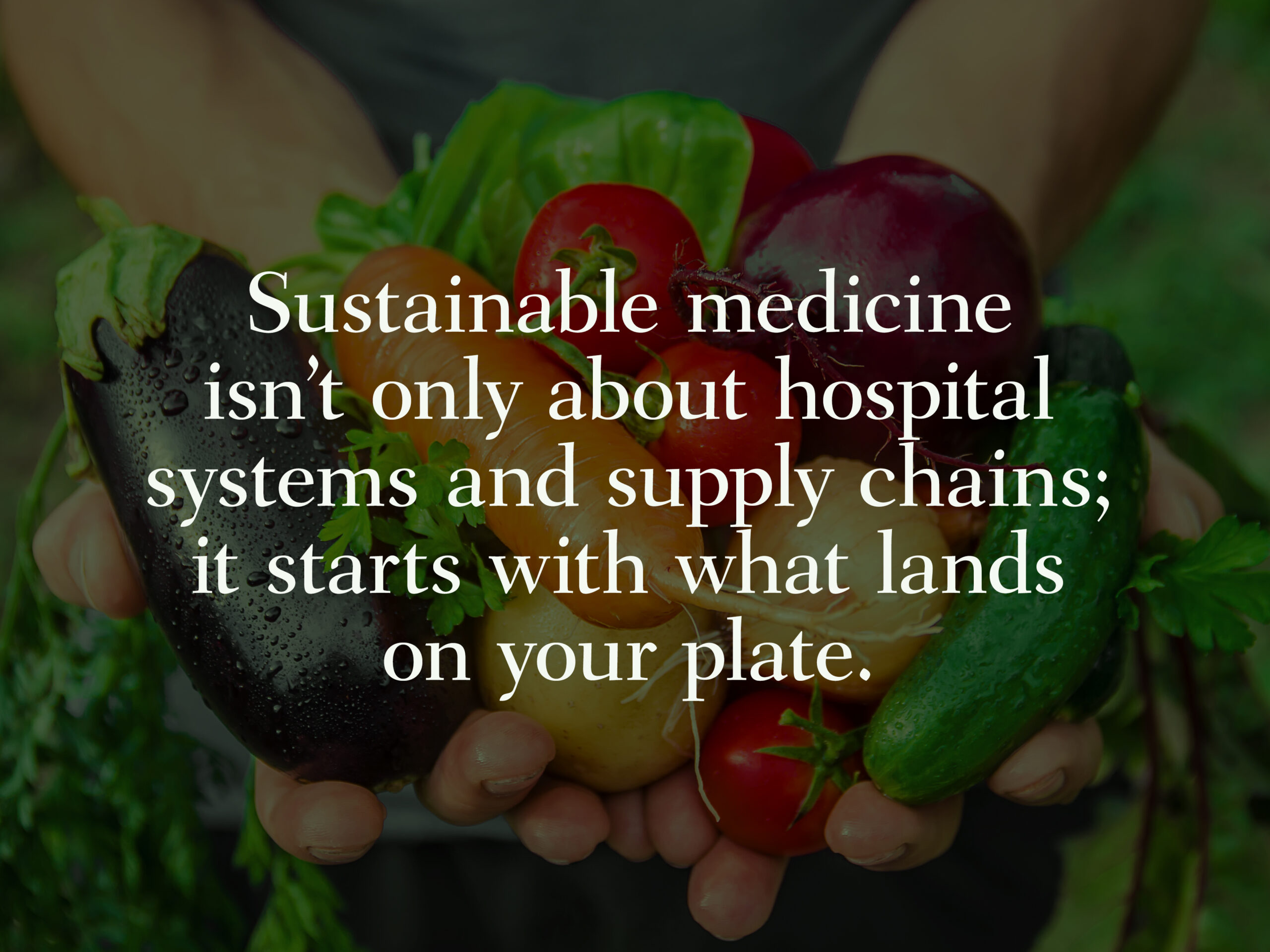
As a family doctor, I’m trained to see the big picture, to look at how all the pieces of a person’s health fit together. My osteopathic practice centers on lifestyle medicine, which focuses on six evidence-based pillars: nutrition, exercise, sleep, substance minimization, stress management, and social connections.
What I’ve noticed over the past year is how often plastic appears in each of these pillars. It’s in the water bottles patients carry. It’s in the packaging around the medications I prescribe. It’s in the exam gloves I wear, the specimen containers on my counter, the tubing connected to blood pressure cuffs. When I look around my exam room after a morning of appointments, I see plastic waste in every corner, and most of it was used for less than five minutes.
My patients are taking notice, too. They are starting to think about BPA in their water bottles, sometimes about whether their takeout containers are safe, about what’s leaching into their food. Given that 84% of Americans are concerned about plastic pollution (Oceana), these questions shouldn’t surprise me, but I wasn’t prepared for how they connect to nearly every health conversation I have.
Here’s what I want patients to know about where plastic intersects with the lifestyle factors that shape their health:
Nutrition
The biggest concern is phthalates, the chemicals that make plastic flexible. They’re in food packaging, beverage containers, and plastic wrap. Research shows phthalate exposure from food contact materials is linked to approximately 90,000 deaths in the U.S. annually, with higher burdens on Hispanic and African American communities (Health Care Without Harm). The effect is worse when hot food or beverages contact plastic containers compared to room temperature items.
These plastic-related chemicals affect children’s brain development and are connected to inflammation, obesity, diabetes, immune system issues, and asthma. These are the very chronic conditions I’m treating every day.

Exercise
When chronic inflammation, obesity, or diabetes limit someone’s ability to move comfortably, it affects everything. I also think about the plastic in athletic equipment, such as swim goggles, yoga mats, water bottles used during workouts, and wonder about repeated exposure over time.
Sleep
Poor sleep compounds every health problem. I see patients with obstructive sleep apnea who need CPAP machines to regulate their breathing each night through plastic masks and tubing. It’s medically necessary, yet worth researching what exposure means over months and years.
Substance Use
Plastic itself may be a harmful substance worth minimizing. There’s emerging research suggesting microplastics might affect how certain medications work in our bodies, potentially reducing the effectiveness of some antibiotics (Nature). Cigarette filters contain microplastics, adding another risk to smoking.
Stress Management
Information itself can be a source of stress. Learning that microplastics are in placentas, blood, and everyday products creates anxiety, especially when patients feel they can’t control their exposure. I see this in my practice: people overwhelmed by conflicting health information, unsure what changes actually matter. The sheer volume of “things to worry about” becomes its own burden, and microplastics is now on that list.
Social Connections
One unexpected place this topic shows up: in conversations between patients. When one person mentions switching to a reusable water bottle or asking their grocery store about plastic packaging, others take notice.
These conversations create a sense of shared concern and collective problem-solving. It’s similar to how we approached tobacco reduction: not by asking individuals to solve a systemic problem alone, but by normalizing conversations about change. When people talk openly about what they’re trying, it becomes less overwhelming and more manageable.
The scale of the microplastics problem can feel overwhelming. But knowledge creates opportunity. As physicians, we made smart choices about infection control in the 1960s with the information we had. Now we’re learning more about what those choices cost us in ways we couldn’t have predicted.
I don’t expect to solve this alone, and I can’t eliminate plastic from my practice tomorrow. But I can pay attention. I can ask what’s necessary versus convenient. I can have these conversations with patients who are already asking the questions.
That feels like a reasonable place to start.
Sources
- Health Care Without Harm. Plastics FAQs. https://global.noharm.org/focus/plastics/faqs
- Nature. (2024). Microplastics and drug efficacy. https://www.nature.com/articles/s41598-024-75785-4
- Oceana. 8 in 10 American Voters Support a National Policy Reducing Single-Use Plastic. https://usa.oceana.org/8-in-10-american-voters-support-a-national-policy-reducing-single-use-plastic/
- The National Institutes of Health. (2024). Microplastics in cigarette filters. https://pmc.ncbi.nlm.nih.gov/articles/PMC12155882/
- The Washington Post. (2026). Microplastics science discoveries. https://www.washingtonpost.com/climate-environment/2026/01/04/microplastics-science-discoveries/