I grew up in a community where everyone had a garden. My parents and our neighbors grew their own food, bought meat raised on each other’s farms, and canned almost everything. It wasn’t gourmet. It was agrarian common sense.
My brother, a business professor, still grows his own vegetables and shares them with our family. The quality is better than anything wrapped in plastic. It’s his way of nurturing us. And many of the people I grew up with are living healthy, active lives into their 90s.
Nobody called it sustainable. It just was.
Two recent studies are making the case in data what my community practiced by instinct. Research from GlobeScan and EAT, published in Trellis, found that health is the primary driver of dietary change — not environmental concern. People respond to what feels personal and immediate. Sustainability framed in planetary terms lands as background noise. Sustainability framed as “this is better for your body and your budget” actually moves behavior.
A Tufts University study published in Nature Food makes the same point from a different angle: the least expensive options within each food group produce significantly fewer greenhouse gas emissions than typical choices. Budget-conscious eating and lower-carbon eating are, more often than not, the same thing.
For someone managing a transplant, this isn’t abstract. Every meal built around whole, predictable staples works with my health, not against it. Consistency of eating the same vegetables and fruits, week over week isn’t boring. It’s functional. My immunosuppressants metabolize differently depending on what I eat. Simplicity isn’t a lifestyle preference. It’s a clinical strategy.
This is what we overcomplicate. Healthy eating gets positioned as aspirational — expensive, elaborate, reserved for people with time and disposable income. But the evidence keeps pointing somewhere else entirely. Simple, affordable, and consistent is both the most sustainable choice for the planet and the most effective one for the body.
At Affinity Strategies, we say the patient is our purpose across the 30+ medical specialty associations we serve. Patient-centered care has to show up in how people actually eat — not just in clinical guidelines. Are we making wellness feel achievable, or are we designing systems that make “healthy” a premium product?
The answer my community had — grow what you can, share what you have, buy local, choose the simple staple over the processed product — isn’t a throwback. It was a blueprint.
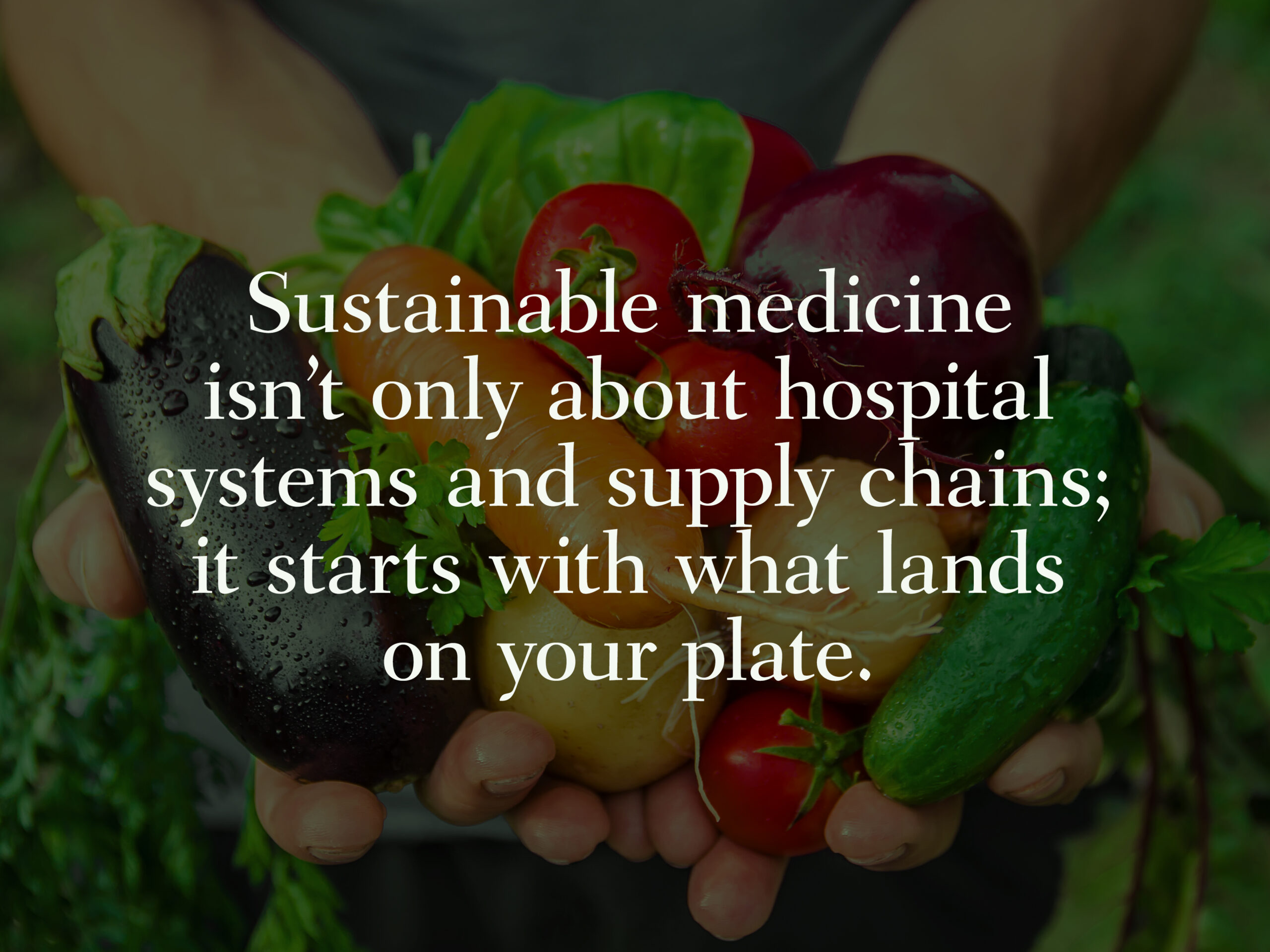
Sustainable medicine isn’t only about hospital systems and supply chains; it starts with what lands on your plate. At the Greenwell Project, we’re working at the intersection of patient health and planetary health. If you’d like to hear from us, we’d like to hear from you.